If I asked you how you feel about yourself, what would you say?
Most of the women I work with — smart, capable, high-achieving women — don’t hesitate. They’ll say, “I like myself.” And they mean it. They can list things they’re proud of. They’re confident in certain areas of their life.
But when I ask a follow-up question, everything changes:
Do you act like you love yourself?
That’s where the pause comes.
Because there’s a big difference between believing you’re “good enough” and actually living like you are.
Most of us have been taught — directly or indirectly — that our value comes from how we look and how much we do for others. So we overcommit. We overdeliver. We say yes when we want to say no. We put ourselves last and call it responsibility.
But underneath all of that is a quiet belief:
If I stop doing all of this… will I still be enough?
The truth is, you don’t have to earn your worth. You are valuable simply because you are you.
But knowing that intellectually and living it are two very different things.
Living it looks like boundaries.
And boundaries are where this work gets real.
Because it’s one thing to say you value yourself. It’s another thing to prove it in the moments that feel uncomfortable — when your boss asks for something and your plate is already full, when your calendar is overflowing, when saying no might disappoint someone.
Most of us have built our careers by being the person who says yes to everything. We get it done. We don’t complain. And over time, that becomes our identity — and other people start to rely on it.
But constantly saying yes doesn’t make you more valuable. It makes you more depleted.
What I’ve seen again and again — in my own life and in coaching hundreds of women — is that when you start acting like you love yourself, your behavior changes.
You pause before automatically saying yes.
You consider your energy, your priorities, your well-being.
You start asking, What do I actually want here?
And sometimes, you say no.
That can feel scary. It goes against everything we’ve been taught. But something powerful happens when you do.
You create space.
Space to think more clearly.
Space to show up more intentionally.
Space to contribute at a higher level.
And here’s the part that surprises people: this is often when your career starts to grow.
Because leaders aren’t looking for someone who says yes to everything. They’re looking for someone who can prioritize, think strategically and communicate trade-offs clearly.
That’s what boundaries demonstrate.
They signal confidence.
They show self-respect.
They tell the world: My time and energy matter.
And when you believe that, others start to believe it too.
This isn’t about becoming a different person. It’s about becoming more aligned with who you already are.
It starts small. One boundary. One decision. One moment where you choose yourself.
Because when you stop just liking yourself — and start actually acting like you truly love yourself — everything changes.

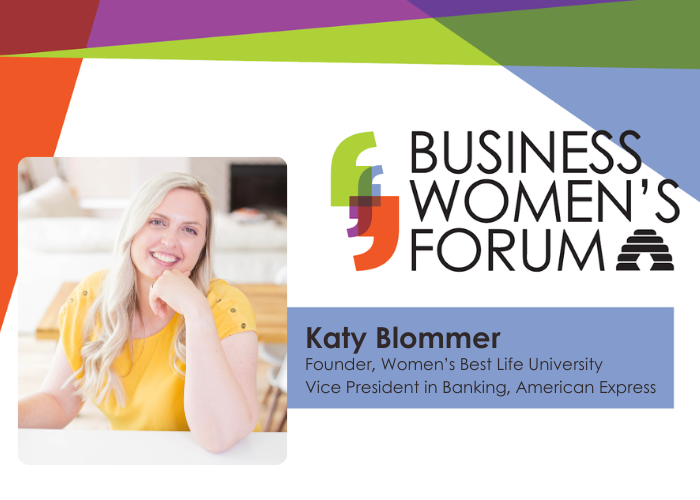
About Katy Blommer, Founder, Women’s Best Life University, Vice President in Banking, American Express
Katy Blommer is the Founder of Women’s Best Life University and a Vice President in banking at American Express, where she has worked for 24 years. She started at Amex doing customer service and worked her way up to the VP level, leading large teams. On her journey, she’s learned how to be an excellent leader and coach and found her passion for coaching women in all aspects of their lives. She does this through her company group program called The Working Mom Happiness Method and her successful podcast of the same name. Blommer was also named one of Utah Business’s 30 Women to Watch in 2023! She lives in Farmington, Utah, with her husband and two boys, and she has spent the last 16 years learning how to create balance, maintain healthy habits and design and live her best life as a working mom.
*Any reference obtained from this blog to a specific initiative, issue or topic does not constitute or imply an endorsement by the Salt Lake Chamber. The views and opinions expressed in this blog do not necessarily reflect those of the Salt Lake Chamber.